

What’s the ideal age to move overseas with children?
As this topic is constantly at the top of my FAQs, and both my previous article and my Expatability Chat Podcast episode remain ‘Top of the Charts’, I feel it time to update with a new article.
You’re searching for advice on moving abroad with your children, and you want to know what’s the ‘best age’ because you want your child to thrive in another country. You’re in the right place! This is what I’ve been writing about since 2012 😉
While I’ve previously suggested ages when relocating as a child is easier, that doesn’t help if you feel the need to move abroad now, for whatever reason.
Maybe life is becoming more difficult in your home country, and you seek a better life overseas – ASAP.
Therefore, the best time is now, regardless of your child’s age.
You can make the transition easier for them by offering support geared to their age, emotions, maturity, and experience.
Understanding the decision to move abroad
Deciding to move abroad with kids is a significant family decision. It is, quite literally, life changing.
Your decision to relocate is likely a complex one. You may be moving to escape a certain set of government rules, to move to a less politically divisive environment. Perhaps you’re moving away from a cost-of-living crisis and seeking a better quality of life elsewhere. Maybe you’re looking towards a safer location, where you and your children can live a freer life.
However, keep in mind that your decision to move is not their choice.
No matter what your reason is for this move, it’s not your child’s reason. It’s understandable and commendable that you want to move for a better life for your children but do keep in mind that you’re viewing that ‘better life’ from your adult perspective, through the lens of your life experience. Your kids don’t have that foresight, or insight.
It’s not just about finding a new place to live; it’s about uprooting your children from their familiar environment and helping them make the transition to a new life, which may be very unsettling for them. It is important to understand and be prepared for the impact on the family dynamics and the emotional preparedness of each member.
So, with that said, let’s unpick how to help your child accept this move, understand their potential brighter future, and fully embrace this fabulous new life in a new country with enthusiasm.
Factors influencing the best age to move to a new country
Determining the best age to move is subjective and depends on your family’s unique circumstances. As I always say, ‘Everyone is different!’. And this includes children. Kids aren’t a homogeneous mass – they each have their own fabulous foibles, and you need to work with your child to help them process the move as smoothly as possible.
I still believe that moving abroad with younger children is easiest, but that doesn’t mean you’ve missed the boat – or plane – if your kids are older.
It’s essential to consider your children’s personalities, your support system, and your ability to provide the necessary emotional scaffolding.
Let me quickly break down the different age groups and what challenges you might expect.
Babies and toddlers
Babies, toddlers, and pre-schoolers; very small children under about the age of five. Super easy to relocate at this age because they are extra portable!
At this age, your little one is totally reliant on their family unit for everything, for relationships, trust, emotional stability, food, hugs, entertainment – everything. They just need your presence. Moving a child at this age will not cause any significant difficulties at all.
School age kids
Once your child attends school full-time, your move abroad could get a little more difficult.
The family unit is still essential, of course, because they still need you for routines and stability. However, they now have their own unique personalities, and their own capacity for self-expression… as I’m sure you’ve noticed!
As they’re now making friends outside of your family group, moving away at this age often means cutting friendships completely, because they’re too young to keep in touch independently. So, you can expect a lot more reluctance and opposition towards your move, particularly as they don’t have the capacity for abstract forethought.
Teenagers
And… here we go! My most downloaded Expatability Chat Podcast episode of all time is Moving abroad with teenagers which prompted me to write an entire trilogy on the topic. So, rather than repeat myself here, let me just link you to those articles here:
- Planning a move abroad with your teenager?
- Supporting teenagers through a move abroad
- How to help your expat teenager settle abroad
Emotional preparedness
Moving abroad with kids – regardless of their age – requires careful consideration of their emotional preparedness relevant to their age, their personality, their lifestyle, and yours.
You need to focus on creating a sense of security and stability during the move. This might involve familiarising them with the new country through research. Maintain consistent routines and offer plenty of reassurance. These things will help them feel safe in this new environment and make them feel loved and supported.
Preparing your child for life abroad
When planning to move abroad with kids, one of the initial steps is discussing the impending move openly and honestly with them. There’s an entire section of many, many articles right here on ExpatChild about preparing kids for a move, so grab a cuppa and take a look!
Discussing the move with your child
How to explain an overseas move to children depends on their age, and the way you approach these conversations will vary. (Yes, there will be many conversations, not just one.)
For younger kids, keep it simple and positive, focusing on the exciting aspects of living in another country, such as exploring new cultures, trying new foods, and maybe even attending an international school. For older children and teens, provide more detailed explanations, addressing their questions and concerns directly.
Also, consider that while they may miss their current life, they may find advantages in their new life and school, particularly if they are fluent in a different language. Please help them learn a new language before you move as it will give them a huge advantage when they start their new school.
It’s vitally important that you validate their feelings, acknowledging any anxiety or sadness they may express about leaving behind friends and familiar places.
Addressing concerns about leaving their friends
One of the biggest worries for kids when faced with a move abroad is leaving their friends behind. Brainstorm ways to maintain these connections. This might involve regular video calls, planning visits back home, or encouraging them to stay in touch through social media.
Emphasise that while they will be making new friends, their old friendships can still remain strong.
Create a supportive environment
Creating a supportive environment is crucial. This starts with acknowledging that challenges are normal parts of the transition. Encourage open communication, where children feel comfortable sharing their feelings and experiences about moving to another country and adapting to a different lifestyle.
Maintain familiar routines as much as possible to provide a sense of stability.
Get involved in the expat community to find other families going through similar transitions.
A nurturing atmosphere will help them navigate the unique challenges of moving to a new place and help them grow as global citizens.
Adjusting to expat life
Common challenges in adjustment
Moving abroad with kids presents unique challenges that can affect the whole family. Adjusting to a new country involves more than just finding a place to live; it means navigating different cultures, adapting to a new language, and coping with culture shock. Children may miss their friends and school, leading to feelings of loneliness or isolation. Even young kids can experience these challenges, although they may not be able to articulate them as readily as older kids as they just don’t have the words to share their big feelings.
All through this, your own adjustment can impact how your emotional presence is impacted. The stress of dealing with everything can mean you feel overwhelmed in all ways.
If you’re in the first stages of moving abroad, my Ultimate Relocation Planner has lots of advice and tips to help you overcome overwhelm.
Emotional support throughout the expat journey
Focus on open communication. If you have two or more children, talk to each of them individually about the upcoming move. Involve them in the planning process. If your kids get to participate, it will make them feel more in control and reduce anxiety related to the upcoming move.
Be prepared for emotional outbursts or increased clinginess/rebellion, depending on their age, and the individual.
Acknowledge their feelings and validate their concerns. This is so important. Children need to feel heard, to feel their emotions and fears are relevant.
Once you arrive at your new place, prioritise setting up their rooms to make them feel more comfortable and secure and try to make the transition as easy as possible for them.
After the move: build new connections
Once you arrive, focus on building new connections. Encourage your children to get involved in activities where they can meet other kids. This might include joining sports teams, music groups, or community clubs. Fostering a sense of belonging as soon as possible after you arrive will help smooth the transition.
Explore the new culture together as a family and embrace the unique challenges and opportunities that come with living abroad with kids, including adapting to a new school and learning a new language.
Support the emotional needs of your child
 At every stage of this expatting journey, you need proactive strategies to help your child express their emotions.
Consider your children’s personalities and their emotional maturity. If you have two or more kids, remember that each of them will react differently to the move. Be patient, be supportive, and be present.
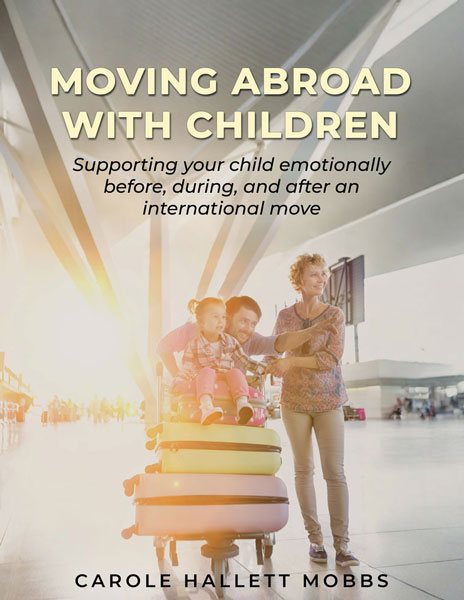
My eBook, Moving Abroad With Children, shares insights from years of working with internationally mobile families and helps parents thoughtfully consider these issues, and more. It explores the emotional side of moving abroad with children – from timing and preparation, through goodbyes and adjustment, to belonging and parental uncertainty.
There is no ideal time to move abroad with children
Ultimately, there’s no best age to move abroad with kids. Every child is unique, and what works for one family may not work for another. Some kids might thrive in a new environment, while others may struggle with the adjustment.
If you’ve been waiting for the optimal time to move, you may be waiting forever.
If you don’t make this move soon, maybe you never will.
What will you regret most? Waiting, or making that leap into a better life now?
Resources for ongoing support
Moving abroad with kids is a journey, not a destination. There will be ups and downs, good days and bad days.
Remember to take care of yourself as well as your children.
If you’d like to discuss your plans, or anything ‘expat’, I’m here for you as an Expat Lifestyle Mentor. If you’d like a quick, one-off conversation that doesn’t ask you to explain everything from the beginning, book a call with me. You can go straight to my calendar here.
And remember, my eBook, Moving Abroad With Children, is available to help you navigate the emotional challenges of moving overseas with kids. It offers reassurance about common challenges, perspective on age and adjustment, and language for tough conversations.
Living abroad with children is fantastic!
If you’re a parent considering a move abroad with kids, it is important to know that you’re not alone.
Moving is a big decision, but it can also be an incredibly rewarding experience for the whole family. Embrace the opportunities to explore new cultures, learn a new language, and broaden your children’s horizons.
There will be challenges along the way – that’s natural – but with the right support and mindset, your family can thrive in your new home.
Trust your instincts, prioritise your children’s emotional well-being, and don’t be afraid to seek help from other professionals if you need it.